


When Flushing Is Not Menopause or Mast Cell Activation Syndrome

Carcinoid Tumours and Carcinoid Syndrome
When Flushing Is Not Menopause or Mast Cell Activation Syndrome
Have you had your bowels screening test yet? Please don't put it off.
Introduction
Flushing is one of the most common symptoms experienced by women during perimenopause and menopause. However, not every episode of flushing is caused by changing hormones.
Other conditions, including Mast Cell Activation Syndrome (MCAS) and the much rarer carcinoid syndrome, can also cause flushing. Because these conditions share many of the same symptoms, they can sometimes be mistaken for one another.
Although carcinoid tumours are uncommon, recognising the warning signs can lead to earlier diagnosis and treatment.
This leaflet explains what carcinoid tumours are, why they cause flushing and wheezing, how they differ from MCAS, and when further investigation may be needed.
What Is a Carcinoid Tumour?
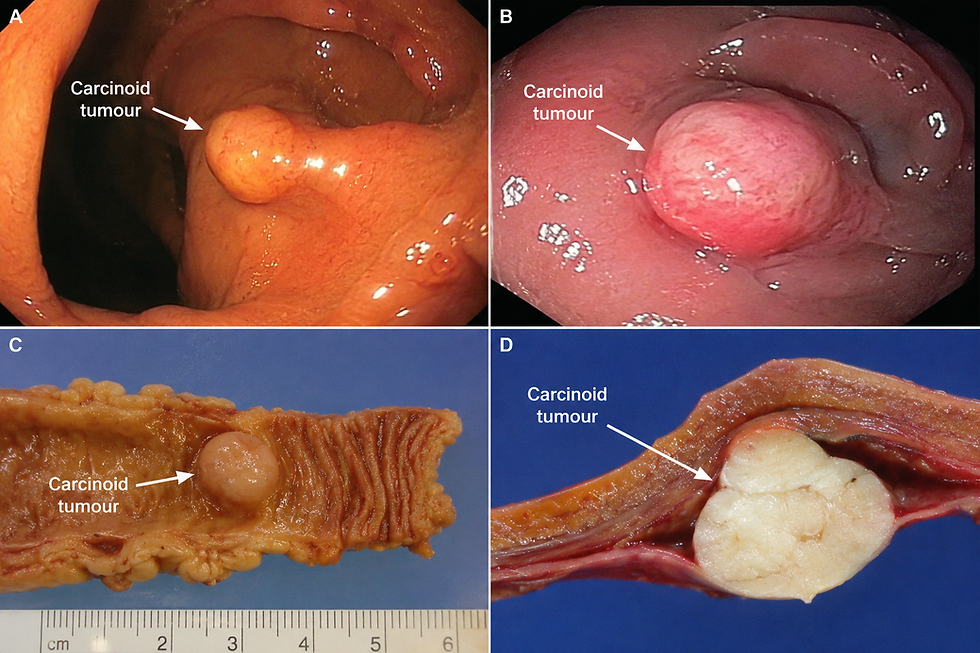
A carcinoid tumour is a slow-growing neuroendocrine tumour (NET).
Neuroendocrine cells are specialised cells found throughout the body that produce hormones and chemical messengers.
Carcinoid tumours most commonly develop in the:
• Small intestine
• Appendix
• Rectum
• Colon
• Lungs
• Pancreas (less commonly)
Many carcinoid tumours grow slowly and may remain undiagnosed for years.
What Is Carcinoid Syndrome?
Not all carcinoid tumours produce symptoms.
Symptoms occur when the tumour releases excessive amounts of hormones and other chemicals into the bloodstream.
This is known as carcinoid syndrome.
The main chemical released is serotonin, although tumours may also produce:
• Histamine
• Bradykinin
• Tachykinins
• Prostaglandins
Carcinoid syndrome usually develops after the tumour has spread to the liver, allowing these substances to enter the circulation without first being broken down by the liver. Lung carcinoid tumours may also cause carcinoid syndrome because their hormones enter the bloodstream directly.
Why Does Carcinoid Syndrome Cause Flushing?
The chemicals released by the tumour cause blood vessels in the skin to widen suddenly.
This leads to episodes of:
• Redness of the face
• Flushing of the neck
• Flushing of the upper chest
• Warmth
• Burning sensation
The flushing may last from a few minutes to half an hour.
Unlike menopausal hot flushes, flushing from carcinoid syndrome is often unpredictable and is not related to hormonal changes.
Some people notice attacks after:
• Alcohol
• Emotional stress
• Exercise
• Large meals
Why Can It Cause Wheezing?
Some carcinoid tumours release substances that cause the muscles surrounding the airways to tighten.
This can lead to:
• Wheezing
• Shortness of breath
• Chest tightness
These symptoms can resemble asthma or an allergic reaction.
Other Symptoms of Carcinoid Syndrome
Symptoms vary depending on the hormones released.
They may include:
• Recurrent flushing
• Chronic diarrhoea
• Abdominal cramps
• Wheezing
• Palpitations
• Rapid heartbeat
• Low blood pressure
• Weight loss
• Fatigue
Symptoms often occur in episodes and may become more frequent over time.
Why Does It Look Like Mast Cell Activation Syndrome?
Carcinoid syndrome and Mast Cell Activation Syndrome (MCAS) share many symptoms because both conditions involve the release of chemicals that affect blood vessels, the gut and the airways.
Both may cause:
• Flushing
• Wheezing
• Palpitations
• Diarrhoea
• Abdominal pain
• Dizziness
• Low blood pressure
This overlap means that carcinoid syndrome can occasionally be mistaken for MCAS and vice versa.
Carcinoid Syndrome Compared With MCAS
Carcinoid Syndrome | MCAS |
Caused by a neuroendocrine tumour | Caused by inappropriate mast cell activation |
Mainly serotonin and tumour hormones | Mainly histamine and mast cell mediators |
Flushing often prolonged | Flushing often triggered by foods, temperature or stress |
Chronic diarrhoea is common | Food reactions are common |
Wheezing may occur | Wheezing may occur |
Itching is uncommon | Itching is common |
Hives are uncommon | Hives are common |
Elevated urinary 5-HIAA | May have elevated tryptase or urinary mast cell mediators |
How Does Serotonin Cause Symptoms?
Around 90 to 95% of the body's serotonin is produced in the gut.
When a carcinoid tumour produces excessive serotonin, it can cause:
• Increased bowel activity
• Diarrhoea
• Abdominal cramping
• Blood vessel dilation
• Flushing
Over many years, persistently high serotonin levels may also damage the heart valves.
Can Carcinoid Tumours Affect Mood?
Many people assume that having too much serotonin would improve mood.
Interestingly, this is usually not the case.
The serotonin produced by carcinoid tumours does not cross the blood-brain barrier, so it does not increase serotonin levels inside the brain.
Some people actually develop:
• Low mood
• Anxiety
• Depression
• Emotional lability
This may occur because large amounts of the amino acid tryptophan are diverted into making serotonin within the tumour.
Less tryptophan is then available for producing serotonin within the brain.
Tryptophan is also needed to produce vitamin B3 (niacin).
Some people with carcinoid syndrome develop niacin deficiency, which may contribute to:
• Fatigue
• Poor concentration
• Depression
• Skin changes
• Persistent diarrhoea
Can Carcinoid Syndrome Affect the Heart?
Yes.
Long-standing carcinoid syndrome can lead to carcinoid heart disease.
Excess serotonin stimulates scar tissue formation on the heart valves, particularly the:
• Tricuspid valve
• Pulmonary valve
This may eventually lead to:
• Heart murmurs
• Breathlessness
• Swollen ankles
• Heart failure
Early diagnosis and treatment reduce this risk.
How Is Carcinoid Syndrome Diagnosed?
Do that bowels screening that you've been putting off.
Ask you doctor to refer you for a colonoscopy if are having unexplained bowels symptoms especially witih persistent hot flushes or night sweats .
Your healthcare professional may recommend:
Blood Tests
• Chromogranin A
This blood test may be elevated in neuroendocrine tumours, although certain medications and kidney disease can affect the result.
Urine Test
A 24-hour urinary 5-HIAA measures the breakdown products of serotonin and is one of the most useful tests for carcinoid syndrome.
Before the test you may be asked to avoid foods such as:
• Bananas
• Pineapple
• Tomatoes
• Avocados
• Walnuts
These foods can temporarily increase 5-HIAA levels.
Imaging
Depending on the situation, scans may include:
• CT scan
• MRI scan
• Gallium-68 DOTATATE PET/CT scan
How Is Carcinoid Syndrome Treated?
Treatment depends on the location and extent of the tumour.
Treatment may include:
• Surgery
• Somatostatin analogues, such as octreotide or lanreotide
• Peptide receptor radionuclide therapy (PRRT)
• Liver-directed therapies if the cancer has spread to the liver
The aim is to reduce hormone production, improve symptoms and slow tumour growth.
When Should Carcinoid Syndrome Be Considered?
Although rare, carcinoid syndrome should be considered if you have:
• Recurrent flushing that is not explained by menopause
• Flushing associated with chronic diarrhoea
• Flushing with wheezing
• Unexplained weight loss
• Persistent flushing despite treatment for menopause or MCAS
• Recurrent episodes of flushing without an obvious trigger
Dr Purity's Clinical Perspective
Most women who experience flushing do not have a carcinoid tumour.
The commonest causes of flushing remain:
• Perimenopause
• Menopause
• Mast Cell Activation Syndrome
• Rosacea
• Anxiety
• Alcohol
• Certain medications
However, if flushing occurs together with chronic diarrhoea, wheezing, unexplained weight loss or does not respond to standard treatment, further investigation is appropriate.
A careful history, examination and targeted investigations can usually distinguish between these conditions.
Dr Purity's Key Messages
✓ Carcinoid tumours are rare, slow-growing neuroendocrine tumours.
✓ Carcinoid syndrome occurs when the tumour releases hormones such as serotonin into the bloodstream.
✓ Flushing and wheezing may closely resemble Mast Cell Activation Syndrome.
✓ Chronic diarrhoea is an important clue suggesting carcinoid syndrome.
✓ The serotonin produced by carcinoid tumours does not enter the brain and may actually contribute to low mood by reducing available tryptophan and niacin.
✓ Long-standing carcinoid syndrome can damage the heart valves if left untreated.
✓ Although uncommon, carcinoid syndrome is an important diagnosis because effective treatments are available.
✓ Persistent flushing that does not fit the typical pattern of menopause or MCAS should be assessed by a healthcare professional.
References
Pavel M, Öberg K, Falconi M, et al. European Neuroendocrine Tumor Society (ENETS) Consensus Guidelines for the Management of Neuroendocrine Neoplasms. Neuroendocrinology. 2020.
National Comprehensive Cancer Network (NCCN). Neuroendocrine and Adrenal Tumors. Current Clinical Practice Guidelines.
Garcia-Carbonero R, et al. ESMO Clinical Practice Guideline for Gastroenteropancreatic Neuroendocrine Neoplasms. Annals of Oncology. 2020.
Modlin IM, Kidd M, Latich I, et al. Current Status of Gastrointestinal Carcinoids. Gastroenterology. 2005.
Vinik AI, Wolin EM, Liyanage N, et al. The Biochemical Diagnosis of Neuroendocrine Tumours. Pancreas. 2010.
Disclaimer: This leaflet provides general information only and should not replace personalised medical advice. If you experience persistent flushing, wheezing, chronic diarrhoea or unexplained weight loss, please seek medical assessment. Early diagnosis can improve treatment options and long-term outcomes.
Purity Health Menopause & Wellbeing CentreDr Purity Carr | GP | Menopause Doctor
"Accessible, personalised, evidence-based care."


Comments